These products could be useful for those with sensory disorder (SPD, Misophonia). Please note, we do not endorse specific products and merely provide these as a guide. Alternatively, local shops might have good deals on these products. Please submit a product review if you try a product or currently have tried one. You can read others’ reviews here.

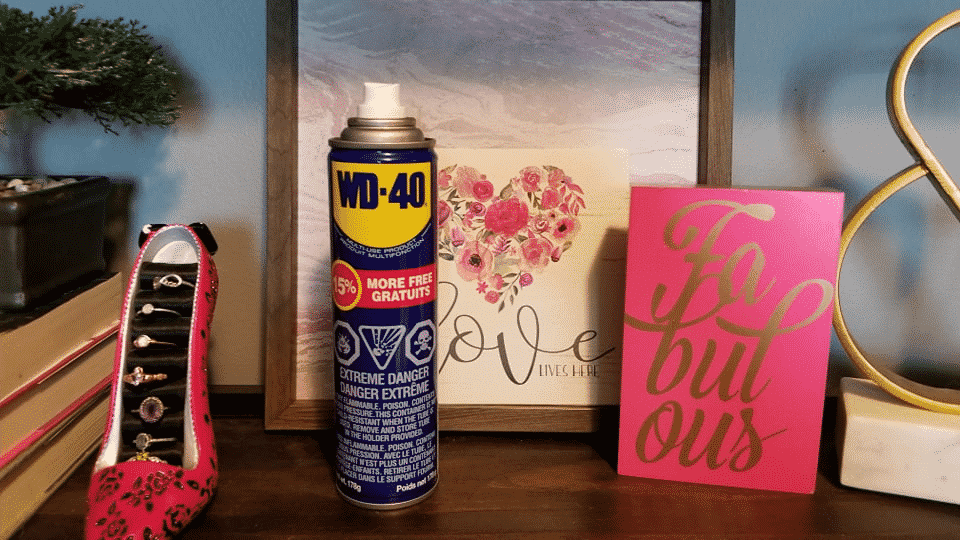
For some reason I went the first 26 years of my life without knowing how amazing WD-40 is for misophonia. It’s also really cheap, which is a bonus. One of my main triggers is squeaky chairs. In a house of gamers (my boyfriend and I), there’s a lot of this. Also, our cupboards and doors sound like they’re auditioning for The Haunting of Hill House. Squeak. Squeak. Is that you, trigger ghost? Anyways, the discovery of WD-40 has been utterly life changing. Spray some of this goopy oil on anything squeaky and like magic it disappears. Hinges, chair mechanisms, and I’d imagine somebody would stop whistling if I sprayed them with it (do not try at home).
I am writing this so that anybody who suffers from squeaking around the house can realize there’s a cheap and easy fix. When the sound comes back, just spray again!
You can buy it on Amazon or pretty much every hardware store, Walmart, etc.
I honestly can’t believe I didn’t hear about this sooner, and I’m in awe at how many triggers this has helped with around the house. You can also use it to clean goop/grime and a lot of other cool ways.
U-HEAR (Unified Protocol to Help Emotions and promote Auditory Relief): U-HEAR is a USF research study about a treatment for children and adolescents with misophonia. We are currently recruiting children and adolescents (between the ages of 8-17 years old) in Florida who have misophonia symptoms and are interested in therapy. Participants will get ten free therapy sessions. Each session will last 1 hour and happen once a week. All sessions will be offered via telehealth. The treatment process will take about 3 months to complete. Participants that complete all study tasks will receive a $50 payment.
If you are interested, please contact our study coordinator, Kelly Kudryk, at kellykudryk@usf.edu or (813) 586-1630.
Principal Investigator: Adam B. Lewin, Ph.D., ABPP
USF Rothman Center for Pediatric Neuropsychiatry
IRB# Pro00042498
I would like to share with you an exquisite essay written by a teenage girl with misophonia. She is in the 11th grade, and as you will see, describes her experience with the disorder with amazing detail. I hope that reading this will help others with misophonia feel less alone, and will help those unfamiliar with the disorder to better understand it. Most of all, I hope this essay generates hope amongst sufferers and their families.
“I know it was winter on this particular day because it was snowing. Even inside the classroom, I was wearing my puffy winter coat that made me look like a marshmallow. With winter comes cold symptoms: coughing, sneezing, sniffling, etc. My desk buddy probably had a slight cold as he was plagued with the signs of one. Usually, I would hear the sounds that accompany a cold and not think twice of them, but for a reason unbeknownst to me, this day was different. I remember thinking, “You don’t know what I hear; I wish you could hear what I hear.”
When an innocent sniffle exited his nose, my world of rainbows and unicorns turned upside down. Somehow, the simple sniffle resembled a meteor violently crashing into an unsuspecting planet. The stars and moon twinkle brightly, unaware of the strife the poor planet has experienced. The meteor brings fiery reigns of terror to the innocent planet, and once the meteor is gone, there is nothing but rubble left. Even after all this destruction has occurred, the stars and moon continue to shine dazzlingly beautiful gleams of light, oblivious to the planet’s agony. But then, the planet screams, a scream filled with unthinkable amounts of pain, and the stars and moon stop shining so brightly.
I am that planet and the meteor is a disorder called misophonia. Misophonia is a neurological disorder in which the brain misinterprets auditory stimuli as noxious, or harmful. When exposed to specific sounds, the individual with misophonia cascades into the fight/flight response. These fight or flight responses use up so much energy, it feels equivalent to sprinting five miles. During these responses, the heart rate speeds up, blood flows quicker, and the person perspires. Now imagine experiencing this 50 times in just half an hour.
Unfortunately, at that moment I had no idea that I had misophonia and felt only as if the world’s sounds were attacking me.
I pulled up the hood of my coat and tried to cocoon myself into it to block out the sound of the sniffles and other noises. I snuggled deeper and deeper into my sanctuary, satisfied with the amount of noise it blocked out. Sadly, this small safe haven didn’t last for long.
“Jean, you are not allowed to wear a hood during class,” the teacher spoke from the front of the classroom. She said this so nonchalantly as if it would be the simplest thing in the world to remove my hood. Yet, in reality, she was asking me to remove the gear that was protecting me from a meteor. I wasn’t one to disregard a teacher’s request, so I took off the hood and allowed the meteor to continue to attack me. It viciously struck me over and over again, until I was nothing but a pile of rubble.
With the help of a counselor, I managed to rebuild the rubble into the person I am today. When the meteors ambush me, they bounce off my skin, only leaving behind a few scratches and burns. While I might have felt resentment towards my desk buddy in the moment, I’ve learned to utilize empathy to cope with the meteors of misophonia. It is important for someone with misophonia to know that it won’t stop them from living. Do I get annoyed sometimes? Yes. Do I have bad days? Yes. Yet, the good outweighs the bad, and I know misophonia doesn’t have the capability of controlling me.”
Published anonymously with permission of author and parents.
Is there Treatment for Misophonia?
- There have been numerous and various kinds of mental and other health providers who claim success with misophonia treatment without any scientific backing
- As stated on the Duke Misophonia and Emotion Regulation website, currently there are no apps, medications or other “cures”
- However, in the last year we have seen funding for research, and we have great hope for treatment based and translational research
- Note: Exposure therapy (specifically graded exposure therapy) is not an appropriate treatment
- Please be wary of both uninformed therapists and doctors
- A cross-disciplinary approach often the best to develop coping skills
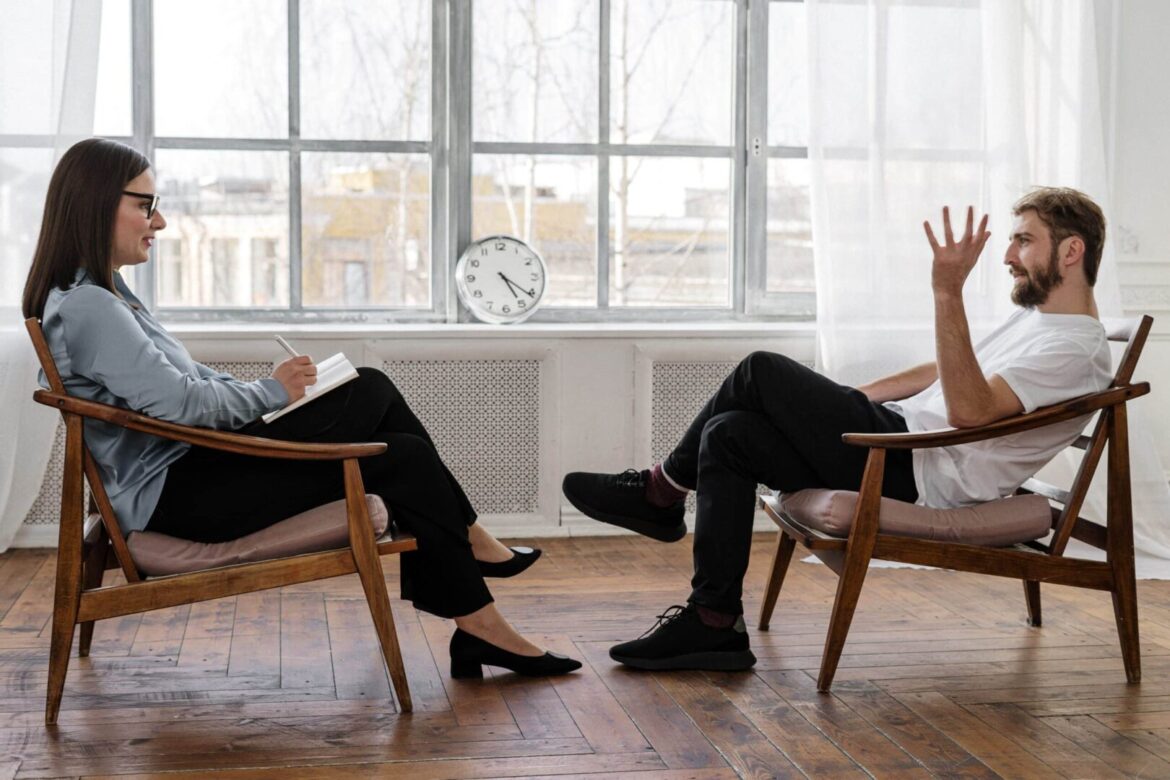
While there is no current treatment for misophonia, providers can learn to help sufferers through our Clinician’s course.
Misophonia Coping Skills Class with Shaylynn Hayes-Raymond
Misophonia Matters is an advocacy-based coping skills class, book, and workbook for adults, teens, and clinicians by long-time advocate Shaylynn Hayes-Raymond. Shaylynn has been advocating for misophonia since 2015 and moved to a career in counselling based on her experiences as a misophonia advocate and sufferer of the disorder. The Misophonia Matters approach includes advocacy, psychoeducation, sensory-based skills, and cognitive and psychological skills. Worksheets are presented throughout the program. Central to Misophonia Matters is the idea that while we cannot treat and prevent misophonia, we can learn to navigate and adapt to our world through accommodation, coping skills, and an empathetic advocacy-based approach.
Take the class on demand. Or, find a live class.
Different Fields Involved in Misophonia Coping/Understanding
Audiology
- Audiologists can: evaluate for misophonia as well as any additional auditory issues
- Can provide devices (ex: in-ear white noise-generators) and recommend sound-producing apps for sound therapy (Meltzer & Herzfeld, 2014)
- Many audiologists ask children to wear the sound generators so that they can hear conversation while decreasing their ability to hear their trigger sounds
Cognitive Therapy
- Offers evidence-based strategies for the treatment of other psychiatric disorders that may be applied to misophonia, such as mindfulness, distress tolerance skills, interpersonal skill interventions, and cognitive reappraisal
- However, rarely works alone because of top/down issue
Coping Skills with Multidisciplinary Team
- Individuals with misophonia may benefit from a team-based approach in which an individualized coping skills plan is drawn from clinician collaboration across the fields of clinical psychology, psychiatry, audiology, occupational therapy, neurology, and neuropsychology
About Diagnosis in General
- Diagnosis is not easy because classification is extremely difficult
- Symptoms overlap with so many different neurological, mental health, and medical disorders
- Certain conditions can be ruled in/ruled out via blood test and other medical tests
- Seeing the explosion of genetic testing
- Many disorders have multiple genes
- Many disorders are epigenetic (genes can be activated or turned off via the environment)
- Even genetic testing, which sounds as though it would be accurate, can be difficult
- We have entered a time in which brain differences and other neural and physiologic testing will help with diagnosing
- However, this is an extremely slow transition and not reflected yet in the DSM-5 or ICD-11 (Diagnostic and Statistical Manual of Mental Disorders- American Psychiatric Association and International Classification of Diseases – World Health Organization)
We look for a differential diagnosis – the process of distinguishing conditions in which symptoms overlap.
- Misophonia and OCD are both neurologically-based disorders with emotional and behavioral components
- A person can have both misophonia and OCD
- However, not all people with OCD have misophonia, and not all people with misophonia have OCD
- The DSM 5 expanded the classification and criterion for OCD to “Obsessive-Compulsive and Related Disorders”
- Within this category are obsessive compulsive disorder (OCD), body-dysmorphic disorder, hoarding disorder, trichotillomania (hair pulling), excoriation (skin picking), substance/medication-induced obsessive-compulsive and related disorder, and unspecified obsessive disorder
DSM-5 Diagnostic Criteria for Obsessive-Compulsive Disorder
- Presence of obsessions, compulsions, or both:
- Recurrent and persistent thoughts, urges, or impulses that are experienced, at some time during the disturbance, as intrusive and unwanted, and that in most individuals cause marked anxiety or distress.
- The individual attempts to ignore or suppress such thoughts, urges, or images, or to neutralize them with some other thought or action (i.e., by performing a compulsion).
Differences of OCD and Misophonia
- Misophonia includes aversive reactivity to environmental stimuli from outside (not just cognitive)
- Obsession with sound is not due to “obsession itself” but due to an intrusion via outside stimuli
- Inability to look away from triggers also not “obsession” (related to threat response)
- Cognitive behavior therapies and medication are the standard treatments for OCD
- Cognitive behavior therapies may help a person with misophonia but only as part of a larger coping skills plan (due to quick reactivity of amygdala which kicks of the sympathetic nervous system/fight/flight)
- Misophonia and OCD are not the same
- Yet, a person can certainly have both and a person can have symptoms of both
Covid-19. News about this is literally everywhere and how it affects people’s lives. What I haven’t seen is how those with misophonia cope during the quarantine during these uncertain times. Some may be trapped with family who trigger them. Whether or not they understand doesn’t matter, because you’re still triggered, and maybe now it’s full time. Maybe the sound of the lawn mower is triggering you, or the footsteps of the upstairs apartment dweller, or the constant barking dog from the neighbors. If you experience these and don’t know what to do because you’re feeling overwhelmed, you’re not alone.
The stay at home mandate for my town went into affect about the second week of March, 2020. All my plans, in the now and for the foreseeable future, were put on hold. Non-essential businesses closed. Parks were closed. Grocery stores remained open. Popular ones were packed as people began to hoard things. Some stores upped the prices on cleaning supplies. Masks and gloves are a regular sight. Social distancing and reducing travel were required. You know all of this, and I’m sure it’s increased many people’s anxiety and depression.
If you’re stuck at home right now and are experiencing more trigger sounds than usual, I encourage you to take advantage of daily walks. Charge your phone, put your earbuds in, and just take a walk around town. Parks have reopened in my town with specific guidelines to follow, so check to see if any parks in your area have done the same. And of course, practice social distancing. If wearing a mask doesn’t make it difficult to breathe, wear one on your walk. Walking will a) allow you some exercise, b) get you away from whatever triggers are happening, and c) calm you down. Only do this if your area allows it.
Another tip is to find a safe space in your home and just retreat there for a little while. Put on a movie or TV show, or your favorite song through your headphones, and just breathe. Your safe space is where no one can interrupt you while taking some time to relax and calm down. Make this clear to those you live with if you have to.
Relieve some stress by taking on a new hobby or learning a new skill. This has been one of the many recommendations I keep seeing while stuck at home. Even if you don’t actually take on something right away, learn the basics of something that interests you. In my case, even before quarantine, I took up knitting. I made some special gifts for people and have one other knitting project to complete. I watched a lot of videos and read a lot of stuff regarding knitting, different techniques, and the right tools to use. This can occupy your mind with something other than whatever is triggering you, and help with coming down from feeling intense rage. If videos trigger you, don’t watch with the volume. Most YouTube videos have auto generated subtitles that are usually 90% accurate. At least, in my experience. Same with movies. Netflix has the subtitle option, as well as Amazon Prime Video.
Speaking of learning new things, for awhile, Shaw Academy has been promoting free content for people. You can take courses there that you normally have to pay for. I’m not sure how long it’s going to go on for, but it’s worth checking out.
If you are getting triggered at night by nature sounds–or people doing things outside or in the upstairs apartment–and trying to fall asleep, try wearing earplugs. They drown out a lot of sound and may aid in helping you sleep. You can also consider sleeping headphones, which is essentially earphones made to wear to bed while you play something that helps you fall asleep.
I hope some of these were helpful. Leave a comment if you have something that helps you!
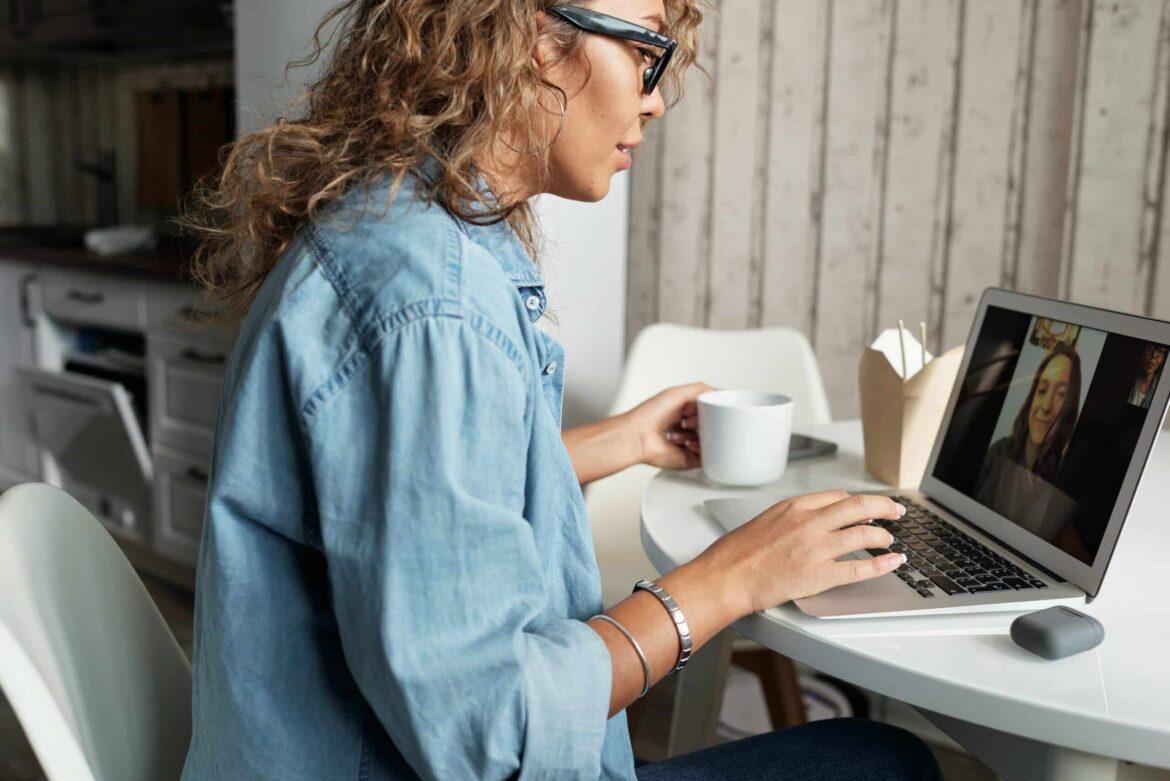
How to Survive Not Being Able to Zoom with Your Family During the Coronavirus
By Lauri L.
My family is having a Zoom chat tonight. It will be one of four weekly since the Coronavirus breakout. I haven’t been able to participate due to mouth sounds and visual triggers. My entire family clears their throats constantly. I’s hard because especially at this time, I really want to have that connection. My family for the most part have been understanding. Although family member told me that there is more to life than Misophonia. They also said that I am being selfish and entitled.
I’m isolating alone. I have no one to physically ask questions, bounce things off, laugh with, listen to music with, cry with, share emotions with, watch a movie with, etc. I also have been furloughed from my job.
The solution that I came up with is to email my family weekly to be included in the Zoom. I share bullet points on what’s been happening in my life while quarantined. Tonight is the first night I am trying this. You see my family is spread out. My dad and older sister are in Oregon, my older brother and his son are in northern Minnesota, and my younger sister and her wife are in Canada. I’m in Minneapolis. I’ll give you all an update after tonight’s Zoom chat.
UPDATE: Eveyone got back to me via email except for my older sister. They were for the most part supportive. I think this is what I’ll do for future Zooms. It seemed to work out.
Questions and Answers
- How meaningful is family time to you?
Family time has never been that important to me. My younger sister and I are the closest. My parents were quite toxic. I do love my family, but time with them is not - Do you find Misophonia is making it hard to have valuable time with your family?
My entire family clears their throats like horses and that is the main reason that I am not able to Zoom with them. - What do you suggest people could do instead of calls? Perhaps online virtual games via chats?
I suggest emailing. There’s a very low chance of being visually triggered, and zero chance of being triggered audibly. I’ve always despised talking on the phone my entire life because of mouth sounds, humming, and - Who came up with the voice chat idea? Did you consider asking them to do something else? Like a “Netflix party”? This is when everybody is in a chatroom and watches a show together online. My dad came up with the idea. He is continually pushing me to participate in the calls despite my telling him why I can’t. I’m not going to put myself in that triggering
- What advice do you have for others with Misophonia?
My advice is to find things in life that make you happy. For me it is my drum lessons, meditation, live concerts, and online friendships with only text and no video. I also see a therapist every other week. She specializes in coping mechanisms for Misophonia. I really look forward to our sessions, and always feel great after them. She validates me often.
- How can families stay close when far apart?
As I said,my family is very spread out. My dad, his wife, and my older sister live in Oregon. My brother and his son are in northern Minnesota, and my sister and her wife are in Canada. I am in Minneapolis I go to a lot of live concerts with my younger sister. They are where I’m at my best because I can’t hear my trigger sounds for the most part. Staying in touch with the rest of my family is important, yet not essential to my well being. I think that the Coronavirus has brought us as close as we have been in quite some time.
I find that to be kind of sad. My family says that they “get” Misophonia , but living with it, I believe is really the only way to actually “get it”. I’ll never forget when I saw my dad for the first time in 3 years, and when he saw me with headphones on, the first thing he did was mock me by mouthing silent words very fast. That’s tough to absorb.
My greatest fear with Misophonia used to be airports and flying. It doesn’t help that my anxiety was trying to get involved too. It was telling me that flying was going to be absolutely horrible. Since my stress levels are already crazy when going through the airport (security terrifies me), I was pretty sure that misophonia-wise I would break!
1. In the airport I realized that I don’t HAVE to stay in one spot
So long as you’re close enough to your gate that you hear boarding announcements you don’t have to stay seated. I can’t stand sitting situations because of leg movements – so I just don’t get into them! You can sit in corners, find a quiet restaurant, or if you’re a member of a certain Credit Card or Club you can sometimes get access to exclusive lounges. I’ve even just hid in a corner before…
2. Be prepared for noises
Headphones should always be charged. If you know you’ll be losing internet (such as on the plane) or insane international roaming fees, make sure you have songs downloaded to your phone or a trust old media player (like an iPod). I suggest having a back-up just in case, and have access to your charging cords. Wireless headphones are great (here are some suggestions). Have extra earplugs too. I like to already be wearing them when I get into a situation.
3. On the airplane, try to control where you sit
Many airlines have “preferred seating” where you can pay to choose a special seat which has extra leg-room, etc. Also, sometimes you can pick your seat on the plane for free. Personally, I always need to be by a window to lean against it and not feel trapped. First Class is a great option if you’re able to afford it because it provides a more comfortable environment (and usually has less seats cramped together). Of course, not everybody can afford this, so consider the preferred seating and free seat choices on booking if available.
4. Prepare to zone out
Headphones. Earplugs. A sleeping mask. A nice travel pillow. Depending on the length of your flight, it’s probably easier to take a nap and avoid the worst part of the stress (being trapped in an environment). As a bonus, falling asleep can reset your sensory system. If you’re worried about valuables, consider checking important items in your luggage (however, I’ve never had something stolen on a plane since it’s pretty obvious to steal from the person next to you).
5. Remember that airports/airplanes are STRESSFUL for EVERYONE
You can do this. You can get through it. It’s so worth it to travel, and remember, you’re not the only one who’s stressed! When in doubt, ask a flight attendant or airport staff for help and suggestions. If you explain your sound sensitivity, chances are the staff will do their best to accommodate.
Best of luck flying!
by Curt Pederson
Work-life on the cube farm can be distracting enough for anyone but especially bothersome for someone trying to cope with misophonia. The noises heard from fellow cube mates run the full gamut that can make even the most focused person lose their concentration.
At a former job, we decided to have a little fun since it seemed a number of people were reluctant to point out that sometimes these noises were distracting and annoying. Borrowing from several different internet sources, we posted a list of Cube/Office Etiquette Rules. The rules were the usual ones that can be distracting and can be trigger noises to a misophonia sufferer: cell phones on silent/vibrate mode, no calls on a speakerphone, no humming/singing to your music, no nail cutting, chew gum/food quietly, drink beverages without slurping, no pen clicking or continuous paper rattling, etc, and even cautioned against eating smelly foods. We reminded everyone that the cube walls are not soundproof and of how sound easily carries. Even though they may not be busy at the time, a neighbor could be trying to focus on a task.
We then took it a step further and assigned point values to “infractions” of the rules at the discretion of the individual(s) noting the infraction. Anyone could “penalize” anyone else or even call themselves out for a rules violation—which often happened and for a while posted point totals on a whiteboard. The goal was to keep it light and get to a point where we could let a co-worker know the noise(s) they were making made a co-worker lose focus or found annoying without being too direct. Some may see it as the “chicken’s way out,” but it worked in our office to make everyone more aware of the noises being made and the impact on co-workers. It also raised our comfort level to point out bothersome noises. Even those with an office had an increased awareness and tried to be more mindful when they visited the cube farm. We had fun with it, no one stormed out, there was no punishment for accumulating a certain number of points or anything of that nature. We felt it was a kinder way to let a cube mate know the noise they were making was distracting/annoying. Several times a person knew they were the guilty party before anyone else said anything. Their “revenge” towards me came on my last day there when several approached my cube with spoons inside empty cups, clanking the spoons in the cups.