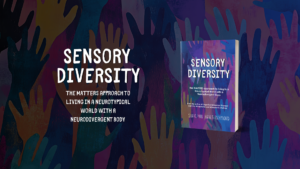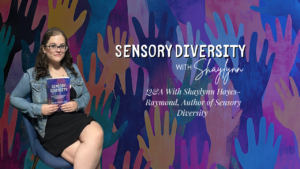
Welcome to Sensory Diversity
Redefining Accessibility for the Human Nervous System.
Sensory Diversity is the recognition that every individual perceives, filters, and responds to the world in a unique way. While neurodiversity celebrates the different ways we think, sensory diversity focuses on the gateway to those thoughts: our senses.
We believe that the world—both digital and physical—should be built to accommodate the full spectrum of human sensory experience.
A Transdiagnostic Approach
Sensory processing does not exist in a vacuum. It is a core component of many neurological and developmental profiles. We advocate for a “radical middle” approach that supports:
Autism & Neurodivergence: Recognizing that for many autistic individuals, the environment isn’t just a backdrop—it’s an intense, often overwhelming stream of data that requires sensory-affirming spaces.
ADHD: Addressing how sensory “noise” and environmental distractions can impact focus, regulation, and executive function.
Sensory Integration: Supporting the brain’s ability to organize information from the body and the environment, ensuring that those with integration challenges have the tools to navigate daily life.
Hidden Sensory Conditions: Providing a dedicated voice for those living with Misophonia (sound sensitivity), Misokinesia (movement sensitivity), and Vestibular Disorders.
Advocacy Through Design
For many, a blinking cursor, a flickering fluorescent light, or an unmutable background video is more than an inconvenience—it is a barrier to access. Our mission is to move beyond simple “awareness” and toward functional inclusion by:
Partnering with Developers: Creating standards for UI/UX that respect the needs of the sensory-divergent.
Promoting Autonomy: Encouraging the creation of environments that allow users to “dial down” triggers without losing functionality.
Validating the Experience: Shifting the narrative from “sensitivity” to “diversity,” acknowledging that a different way of sensing is a valid way of being.
Read our blog...

What is Sensory Over-Responsivity (SPD-SOR)?
Sensory processing involves the reception of and automatic neurobiological responding to stimuli from the outside environment (Brown, Tollefson, Dunn, Cromwell & Fillion, 2001). The proposition that we learn through our

Differentiating the Neurophysiological Underpinnings of OCD and Misophonia
Differentiating the Neurophysiological Underpinnings of OCD and Misophonia 1. Neurophysiological Mapping: OCD vs. Misophonia To differentiate the two, we have to look at the specific hardware pipelines each condition uses

OCD Is More Complex Than “Irrational Fear”: Sensory Processing, Neurodivergence, and the Limits of One-Size-Fits-All Treatment
Obsessive-Compulsive Disorder (OCD) is often portrayed in popular culture as a disorder centered solely around irrational fears and repetitive rituals. While fear and anxiety are important components of OCD for

Is there evidence that OCD is a form of neurodivergence?
There’s growing discussion about whether Obsessive-Compulsive Disorder fits under the umbrella of “neurodivergence,” but the answer depends on how the term is being used. “Neurodivergent” is not a medical diagnosis.

How to Stop the Blinking Cursor (Text Caret | ) in Zoom Docs and AI for Web
If you’ve ever found yourself staring at a blinking line while trying to think, you know how distracting it can be. In Zoom Docs and the Zoom AI Companion, that

Rockwool Safe ‘n’ Sound Mass Loaded Vinyl
Managing the acoustic landscape of a home requires looking beyond personal wearable devices and focusing on the structural bones of a sensory environment. This stone wool insulation is designed to