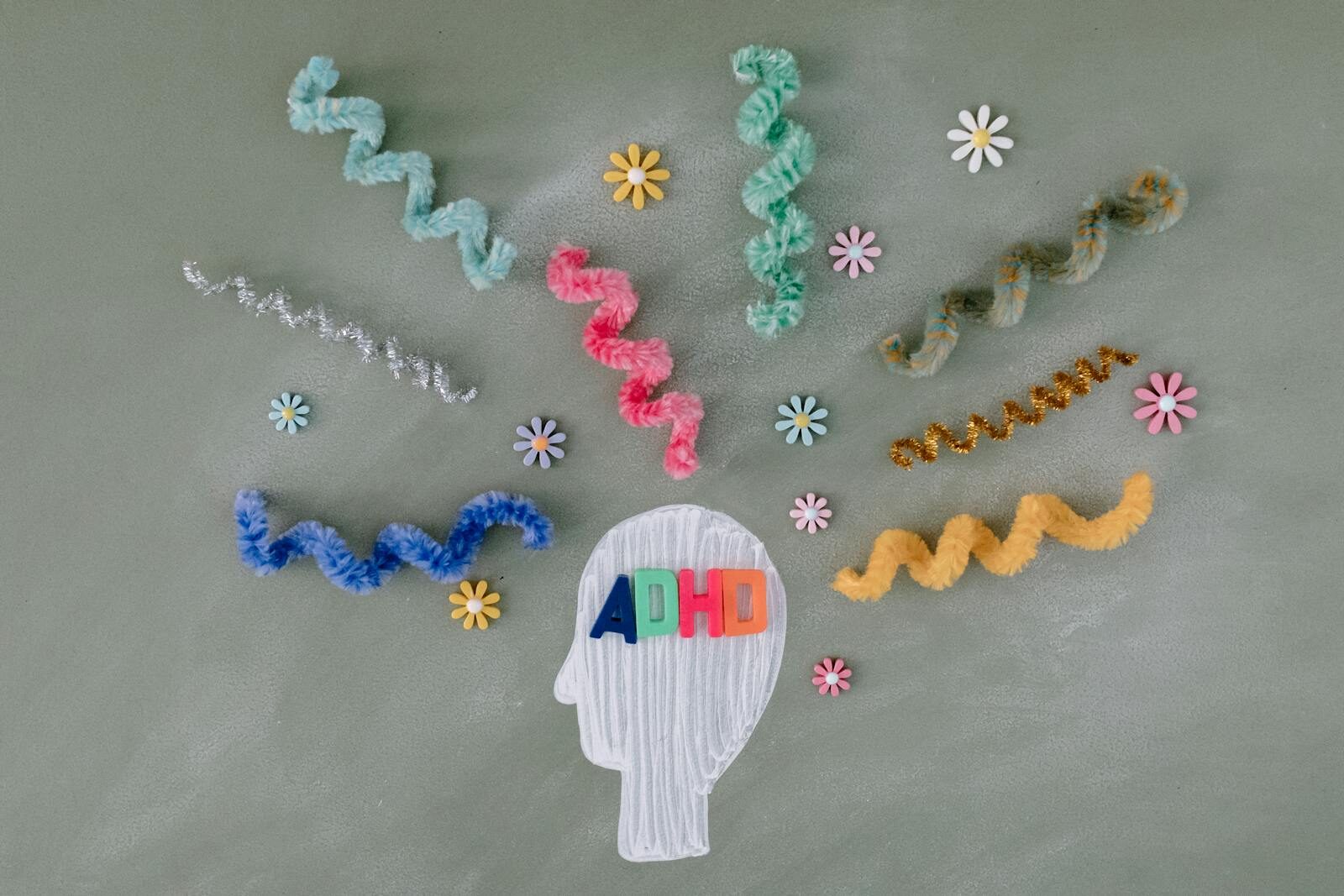
Attention-deficit/hyperactivity disorder (ADHD) is a neurodevelopmental condition involving persistent patterns of inattention, hyperactivity, and/or impulsivity that interfere with daily functioning. Despite its name, ADHD is not simply a shortage of attention. Many people with ADHD can concentrate intensely on something interesting or urgent while struggling to direct, sustain, or shift attention when a task is repetitive, delayed, or poorly structured. Difficulties with executive functions—such as starting tasks, organizing materials, estimating time, remembering intentions, and regulating responses—often create the greatest day-to-day impact.
ADHD is described in three presentations: predominantly inattentive, predominantly hyperactive-impulsive, and combined. Inattention may appear as losing items, overlooking details, forgetting appointments, drifting during conversation, or failing to finish tasks. Hyperactivity may involve visible movement, internal restlessness, excessive talking, or difficulty remaining still. Impulsivity can involve interrupting, acting before considering consequences, impatience, or rapid emotional reactions. Symptoms begin in childhood, occur in more than one setting, and cannot be better explained by another condition. They can continue into adulthood, although their appearance and impact may change (CDC, 2026a).
ADHD is not a moral failure, bad parenting, laziness, or lack of intelligence. Evidence supports strong genetic contributions, with development and environment also influencing how traits appear. Poor sleep, anxiety, trauma, depression, learning disabilities, thyroid conditions, substance use, and other factors can resemble or worsen ADHD symptoms. For that reason, diagnosis requires a careful clinical evaluation rather than a single checklist or online test. Clinicians generally collect history from the person and, when appropriate, family members, teachers, or partners; assess impairment; and consider alternative explanations (CDC, 2026b).
ADHD can create significant consequences. Students may understand material but lose assignments. Adults may experience inconsistent work performance, financial problems, driving risks, relationship strain, or exhaustion from compensating. Girls and women, people with primarily inattentive traits, and adults who performed well academically may be overlooked. Their difficulties may be mislabeled as anxiety, carelessness, or poor motivation.
Peer-reviewed autoethnographies make that hidden effort visible. Hoben and Hesson (2021), writing as academics with ADHD, describe disclosure decisions, institutional expectations, and the work required to maintain professional performance. Swick-Jemison (2023) examines librarianship after receiving an ADHD diagnosis at age 42. These accounts do not represent every adult, but they demonstrate why achievement and professional competence cannot be used to rule out ADHD or the need for support.
The neurodiversity framework recognizes ADHD as a meaningful difference in cognitive regulation rather than a defective personality. Some people associate ADHD with creativity, spontaneity, curiosity, rapid idea generation, or unusual persistence in areas of interest. These qualities do not cancel disability, and disability does not cancel strength. Whether a characteristic helps or harms often depends on context. A fast-moving environment may reward quick responses, while paperwork requiring prolonged self-organization may expose serious barriers.
Public discussion sometimes treats ADHD as either overdiagnosed or universally missed. Both claims are too simple. Diagnostic rates reflect real prevalence, changing awareness, access to clinicians, school practices, and differences in who gets referred. Some groups receive inaccurate labels or delayed care, while others may receive incomplete evaluations. Good assessment documents a lifelong pattern, rules out reasonable alternatives, and identifies the supports most likely to improve functioning.
Support is individualized. Medication is effective for many people and may be combined with behavioral strategies, skills-based therapy, coaching, educational services, or workplace accommodations. External structure often helps: visible reminders, shorter work intervals, written directions, reduced distractions, movement breaks, and dividing large tasks into concrete next actions. Sleep, exercise, and treatment of co-occurring conditions also matter, but they are not substitutes for appropriate ADHD care.
The most accurate question is not whether everyone gets distracted. Everyone does. ADHD is distinguished by a persistent developmental pattern, the degree of impairment, and the effort required to meet ordinary demands. Understanding that difference replaces blame with practical support, helps adults who spent years interpreting inconsistent performance as a personal failure, and hiding the amount of work required to appear organized.
References
Centers for Disease Control and Prevention. (2026a, July 30). ADHD in adults. https://www.cdc.gov/adhd/about/adhd-in-adults.html
Centers for Disease Control and Prevention. (2026b, July 30). Diagnosing ADHD. https://www.cdc.gov/adhd/diagnosis/
Hoben, J., & Hesson, J. (2021). Invisible lives: Using autoethnography to explore the experiences of academics living with attention deficit hyperactivity disorder (ADHD). New Horizons in Adult Education and Human Resource Development, 33(1), 37–50. https://doi.org/10.1002/nha3.20304
Staley, B. S., Robinson, L. R., Claussen, A. H., Katz, S. M., Danielson, M. L., Summers, A. D., Farr, S. L., Blumberg, S. J., & Tinker, S. C. (2024). Attention-deficit/hyperactivity disorder diagnosis, treatment, and telehealth use in adults—National Center for Health Statistics Rapid Surveys System, United States, October–November 2023. Morbidity and Mortality Weekly Report, 73(40), 890–895. https://doi.org/10.15585/mmwr.mm7340a1
Swick-Jemison, J. (2023). ADHD and the early career teaching librarian: An autoethnography. Canadian Journal of Academic Librarianship, 9, 1–16. https://doi.org/10.33137/cjal-rcbu.v9.40953