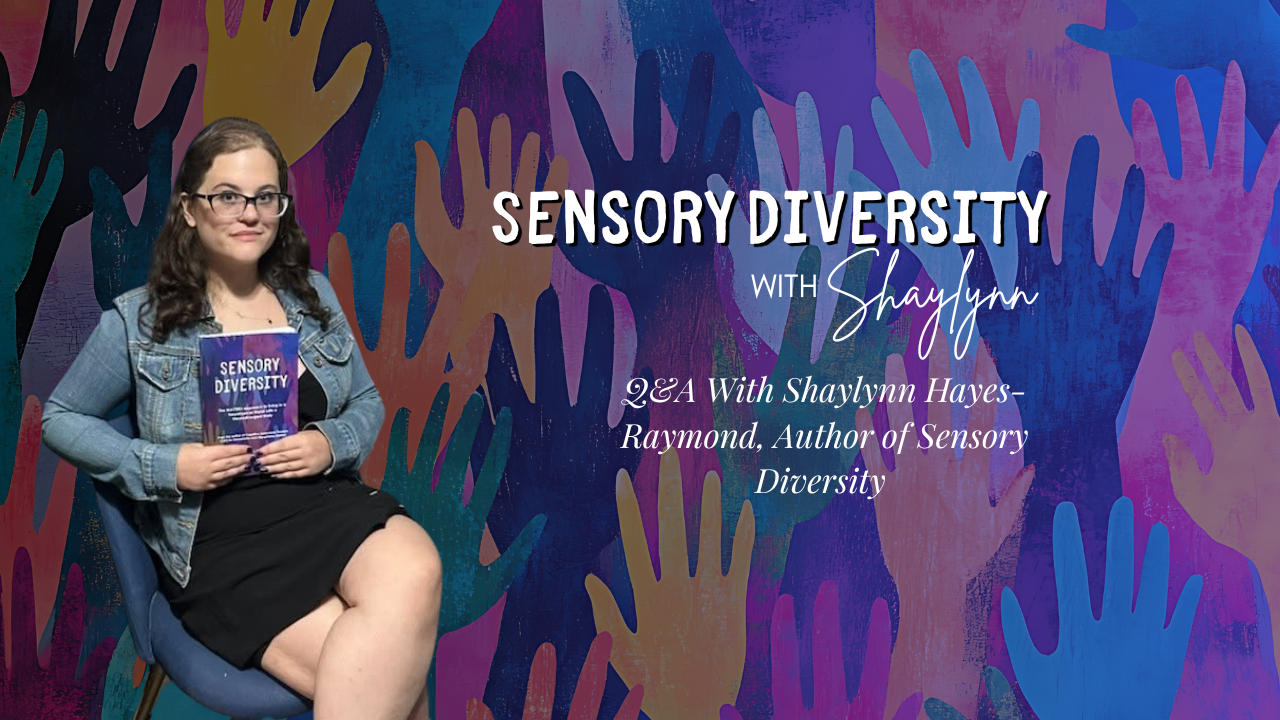
I want to thank everybody for asking questions on the Reddit AMA today! I am copying and pasting the Q&A to share them with our other readers, but will be removing usernames. Please go to the original link above if you’d like to see the original platform content on reddit.
User’s Question i’m so happy to see helpful and informative media come out like this. I’ve struggled since I was 5 and it lowkey ruined my life. I wonder though—how much has the cause of misophonia been looked into? what I mean is what part of the brain is believed to be the source? I have my own theories but id love to hear yours 🙂
Shaylynn’s Answer Hey! Thanks for the question. There has been brain science on misophonia to find the underpinnings and research has shown that misophonia is involved in the nervous system including the fear center of the brain, the amygdala, the auditory salience network, as well as in the sensory motor system. What we know about misophonia right now is that it is most likely neurophysiological (not psychological) and there seems to be a mismatch in the brain’s processing of stimuli as threats. These sources are great for learning more:
Kumar, S., Tansley-Hancock, O., Sedley, W., Winston, J. S., Callaghan, M. F., Allen, M., Cope, T. E., Gander, P. E., Bamiou, D. E., & Griffiths, T. D. (2017). The Brain Basis for Misophonia. Current Biology, 27(4), 527–533. (Demonstrated hyper-activation of the anterior insular cortex / salience network and its connection to limbic emotional centers).
Kumar, S., Dheerendra, P., Erfanian, M., Benzaquén, E., Sedley, W., Gander, P. E., Lad, M., Bamiou, D. E., & Griffiths, T. D. (2021). The Motor Basis for Misophonia. The Journal of Neuroscience, 41(26), 5762–5770. (Identified the strong link between the auditory system and the motor cortex/mirror neuron system governing orofacial movements).
Grossini, E., Stecco, A., Gramaglia, C., De Zanet, D., Cantello, R., Gori, B., Negroni, D., Azzolina, D., Ferrante, D., Feggi, A., Carriero, A., & Zeppegno, P. (2022). Misophonia: Analysis of the neuroanatomic patterns at the basis of psychiatric symptoms and changes of the orthosympathetic/parasympathetic balance. Frontiers in Neuroscience, 16, 827998. (Confirmed autonomic nervous system activation and altered connectivity across limbic and sensory regions).
User’s Question you’re so cool oh my god. thanks for the response!! I’ll look into it!!!
Shaylynn’s Answer Happy to provide information where I can! You may also want to browse through www.misophoniainternational.com there are many articles, some of them interviews with researchers!
User’s Question What would you say the difference is between “Sensory Diversity” and “Misophonia Matters”? Is this book still for people with misophonia, or is it for anybody who is neurodivergent? I’m just confused on the scope, can you clarify?
Shaylynn’s Answer Hi, thank you for the question! I totally understand how this can be a bit confusing, so I want to clarify- the approach of Sensory Diversity comes from the same place as Misophonia Matters– a Matters Approach to coping with sensory dysregulation, misophonia, and more. Rather than the book excluding misophonia, it expands upon it in a trans-diagnostic manner. For example, there are also discussions about our other senses, sensory states, meltdowns, shutdowns, and burnout. The idea is not that misophonia is separate from neurodivergence, but rather a distinct part of sensory diversity.
User’s Question What makes the Matters approach different?
Shaylynn’s Answer Hi, thanks for the question! The matters approach is less of an intervention and treatment and more of an overarching view of brains and bodies from a sensory perspective. Many different interventions can fit into a matters perspective so long as they include advocacy, support, and a multisensory approach. I am also sending a link that can explain a bit more in depth: https://sensorydiversity.com/what-is-the-matters-approach/
User’s Question What direction in current misophonia research are you most excited about, and what questions do you think researchers still aren’t asking enough?
Shaylynn’s Answer I’m most excited that misophonia research has finally taken a turn from being small-scale studies and being seen from a psychological lens. Newer papers are rich with neuroscience and have a far more neurodiversity apprach to misophonia which I believe is going to lead to more answers. As for questions not answered, I think we need robust data on the sounds themselves and why these acoustic properties specifically are the ones that cause triggers. I think this would be useful for accommodation and industrial design, especially when designing sensory friendly spaces.
User’s Question What is the one piece of advice you’d like to give people struggling with misophonia?
Shaylynn’s Answer This is a tough one for me because I know every person with misophonia has their own individual values and needs. I suppose the one piece of advice I’d like to give everybody is that it’s NOT YOUR FAULT. The hard days, the way your brain and body reacts. I know that can take a toll and make you feel defeated, but it truly genuinely is not your own personal failure.
User’s Question In your time as an advocate, how have you seen social media affect the awareness and reception of sensory dysregulation? How do you feel about the “Oh I’m annoyed by chewing, too. Just tune it out, it’s not that bad” crowd?
Shaylynn’s Answer I’ll be honest I try to stay away from it as much as I can for my mental health. I will say that 10 years ago there was a lot more cruelty and memes when it came to “sound rage” in particular, and nowadays there seems to be a more neuroaffirming lens popping up finally. I do think the internet is always going to have good and bad, but I am encouraged by the increase in awareness from a psychoeducation perspective and not just a “for the memes” response in every case!
User’s Question Who would you say is the primary audience for this book? If you were to share a takeaway that could convince somebody it was the right book for them, what would that be?
Shaylynn’s Answer I think that’s a great question! I would say the book is for adults and teens struggling with sensory dysregulation as well as their parents and caregivers. If there’s one key thing people could take away from this book I think it’s that we’re not broken, we deserve accommodations, and we are legitimately struggling with sensory stimuli. This isn’t a joke or a quirk.
User’s Question That’s excellent, I work primarily with young adults, many of whom have sensory issues of one kind or another. I’m always looking for accessible ways to share good resources and this sounds like one. I love that takeaway too, so many young people with this and similar issues deal with so much shame and uncertainty.
Shaylynn’s Answer I will also note that there are a bunch of clinician resources, some free, and some paid on Misophonia International many with young adults in mind! https://misophoniainternational.com/product-category/clinicians/
User’s Question I don’t have any questions, but just wanted to say that I get your emails and I appreciate them as they help me get through the workday with so many sounds!
Shaylynn’s Answer This really means a lot to me, I’m glad the work resonates with you. It can be lonely sometimes, so my favourite part of this work is the community we’ve grown together.
User’s Question What is the difference between ‘sensory diversity’ and ‘sensory dysregulation’? Are they they same thing you keep mentioning both and I’m finding it confusing. Is misophonia sensory dysregulation or separate?
Shaylynn’s Answer Thanks for asking! Sensory Diversity, in my belief, is the over-all spectrum of how we interpret and interact with the world through our senses. Sensory dysregulation is what happens when we are not regulated and thus are experiencing a mismatch or distress. I consider misophonia to be under this umbrella as well as misokinesia, scent sensitivity, sensitivity to light, touch and textures and more.
Sensory Diversity is a psychoeducation and neuro-affirming book following the MATTERS approach to living in a neurotypical world with a neurodivergent body. Sensory Diversity includes practical advice and support for coping with sensory dysregulation. This book offers a neuro-affirming model of neurodiversity and more specifically focuses on the sensory-based challenges that neurodivergent persons face in day to day life.
Who am I? I am an author, advocate, and therapist (LCT-C) as well as the director of The International Misophonia Foundation. I have misophonia and have been an advocate for sensory diversity since 2015. I have a Bachelor of Arts in Political Science and a Master of Arts in Counselling Psychology. I’m also super obsessed with my cats and playing the Sims.
Find the book here: https://sensorydiversity.com/book/
Amazon (Print): https://amzn.to/4xCqZp8
Amazon Kindle: https://amzn.to/4hEyiY5
Barnes & Noble: https://www.barnesandnoble.com/w/sensory-diversity-shaylynn-hayes-raymond/1151112670?ean=9781990467585
Rakuten Kobo: https://www.kobo.com/ca/en/ebook/sensory-diversity?sId=0a1a3a53-9038-4ed9-bbf6-710a0ed8554d&ssId=fiJB2kENY4EL51kqIWUZC
Apple Books: https://books.apple.com/us/book/sensory-diversity/id6802522467