Sensory Diversity
  • Home
  • Blog
  • Neurodivergence
    • What is Autism?
    • What is ADHD?
    • What is Sensory Integration / Sensory Processing Disorder?
    • What is Misophonia?
    • What is Misokinesia?
  • Sensory Lifestyle
  • Sensory DIY
  • 0
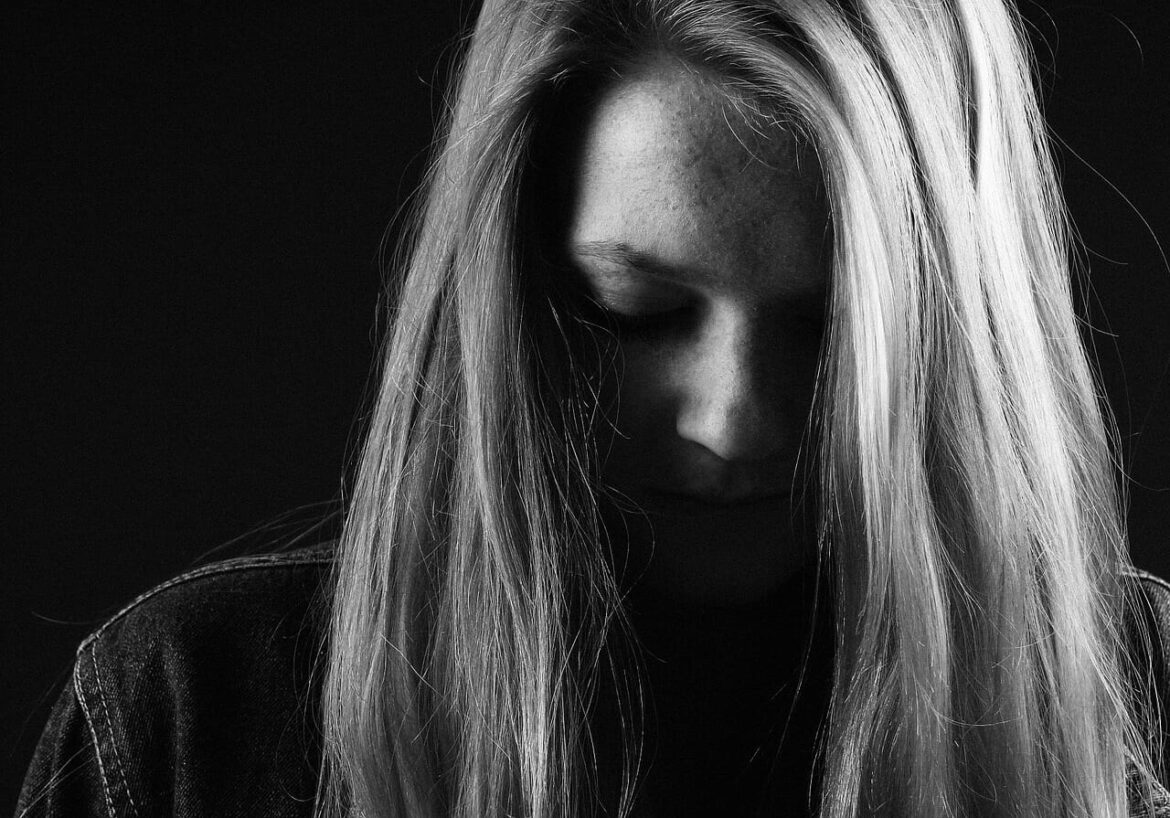
girl 517555 1280
All About MisophoniaAwareness

Misophonia- My Senses Makes No Sense

by Sensory Diversity July 30, 2017
written by Sensory Diversity

I know that when you look at me, you see something other than who I really am. I am not a raging psychopath. I am not a total bitch. I am not a maniacal lunatic. Who am I, really?

I am someone who suffers from Misophonia, a rarely known and seriously misunderstood disorder. My brain processes sounds differently than a normal brain. I am not even talking about bad sounds. I am referring to normal, every day sounds like sniffling, tapping, and even breathing. I am also triggered by visual images, tapping, leg shaking, or even mouth movement. Yes, it sounds completely insane, because it really does not make any sense.

People judge it as human nature. I am guilty of this as well. If I took one look at you smacking a wad of gum I’d think that you were a complete slob. I have watched someone in total disgust as they shoved her hand deep into an ear shattering, crinkling bag of chips, then thrust a handful in their mouth. I have wanted to scream at the top of my lungs, “WHY ARE YOU SUCH A PIG?” If I had the opportunity to get to know you when you were not chewing, I’m sure I’d think you to be a very nice person. We might even be friends, but I just cannot look past the visions or the sounds of your chewing. No matter how caring and compassionate you may be, I cannot get past my feeling of disgust. So, chances are, I will miss out on the opportunity to find out because I cannot get past that initial impression. It does not make sense.

Misophonia is a condition where your sense of hearing really makes no sense. You might hear a sound that you find annoying, you may huff and then just go on with your day. No big deal. For someone who suffers from Misophonia, that is not possible; it IS a big deal. We are not simply annoyed by sounds, we are tormented by them. A sound as simple as clicking your pen open to sign a document can send us into a raging fury. My brain does not allow me to ignore it or move past it. Instead, my brain tends to zoom into that click. That one single click. It becomes louder, more intense, and I am overwhelmed with feelings of hate and rage. I want to hurt someone. I want to hurt you, and I want to hurt myself. I feel the blood rising to my face. My body overflowing with hatred. I have to resist these feelings. Sometimes, I am successful, I can hold my rage in but it eats away at me festering inside. Other times, I may just explode. I may blurt something out loud; a rude comment, a curse word. I may throw things. I have no control over these words or actions. They are simply a reflex reaction to what I feel, and I just react without thought. Many times, I use myself as a human stress ball. I grab my arms or legs and dig my nails deep into my skin, drawing blood…anything to divert my attention from that torturous sound. It doesn’t work, but I need an avenue to try to release some of these feelings and emotions and to try to divert my attention from the trigger sound(s).

Most people will not understand, many will mock even if you try to explain. Not that long ago I went into a retail store to pick up an item. I usually avoid shopping in person, but thought it would be a quick errand. There was a construction worker just standing in the aisle snapping his tape measure incessantly. I shoved my earplugs in but it was too late. As I walked past him, I asked him politely if he could please stop making that noise. I explained that I have a medical condition and it was very disturbing. He looked at me with absolute spite snapping it again and asked me, “This noise?” Yes, that noise, is it really necessary? As I walked away, I overheard him saying, “Oh that’s just some lady bitching about me.” I completely lost it, and immediately went into a meltdown. I grabbed the item I was there for and headed to the checkout. I am positive that people must have been wondering what a full grown woman was sobbing about. A few women in line were sympathetic and offered to let me go to the head of the line. As I was explaining the situation to the manager, my fellow shoppers watched in complete disbelief at his contemptable behavior that he continued to flaunt. The entire time I was in the store this man stood pompously, watching me, grinning as he continued to snap his tape measure. He seemed to find my meltdown gratifying. I was beyond livid at this man and I called security on him. I had to sit in my car for at least 45 minutes before I gained my composure enough to drive home. Would I call security on someone for popping gum? No, of course not, but I felt as if this man was not only tormenting and bullying me, but actually assaulting me. Afterwards, I second guessed my reaction, and I even discussed this experience with my therapist and was assured that I did the right thing. Now, in a non-agitated state of mind, I feel justified in that action. It brought me closure. Hopefully, he learned a lesson in human compassion.

If you see someone that looks distressed or seems to be “freaking out” over something simple, do not be so quick to judge. Chances are, there’s a reason behind their madness. Just because you cannot physically see a condition does not mean it is not real.

I do not normally act this way, I do not want to act this way. I do everything in my power to fight these feelings, but I know that I will not win. Until there is a cure, I will just have to continue to live my life by avoidance as best as I can. If you see me having a meltdown, remember that I suffer from Misophonia and the way it affects me makes no sense.


July 30, 2017 0 comments
2 FacebookTwitterPinterestEmail
pexels keenan constance 2865901 scaled
Coping

I’m Not Avoiding You, My Misophonia Is

by Sensory Diversity July 25, 2017
written by Sensory Diversity

Lately I’ve felt pretty guilty. For three years I lived on my own, in a city 6 hours from home. People did not expect to see me. I had a group of friends and a life in the city. I saw them when it suited me. Most of them were amazingly understanding and I feel like I had built a network of people that were understanding. Then, money led to me moving back home I even got a credit card from creditloan.com to be able to help around. It’s never nice to feel like the rug has been pulled out from under you. That’s not what this is about.

Now that I’m ‘home’ friends and family are flabbergasted when they learn I’ve been around for months. Very few of them have seen me. I am not intentionally avoiding friends and family. However, as I think harder on it, maybe I am. You see, my misophonia has gotten so bad that the mere thought of explaining the situation to more people, risking triggers, and having the inevitable “first trigger conversation” is too much. It may seem irrational, but the idea of being triggered affects me so greatly that I simply avoid confrontation altogether. The idea of a relative showing up even weeks from now brings me so much distress that I become anxious and irate.

Because of my misophonia I am now nocturnal.

I rarely go outside except for the wee morning hours before most people have even woken. I do this not because I dislike people, but because triggers are so life-altering, so volatile, that avoidance at all costs has become my new way of life. Still, there are people I love and miss. Unfortunately, seeing them is a lot of effort. It is wrought with fear of yelling at them, of feeling hurt by their actions (despite them not knowing they did it) and the inevitable tarnishing of relationships that comes from great strain.

I’ll admit to throwing back a few drinks whenever I have to face crowds. It’s the only way I can even stomach the idea of being around a crowd larger than 3. Yes, 3. That’s how isolating misophonia is. I turn down shopping days, and I turn down casual chats. I’m not trying to be cruel and I certainly don’t want to be isolated. The thing about misophonia is that it cannot be controlled. As many here know, we don’t have a cure yet. Even using a sensory diet and regime cannot alleviate all of the symptoms from being triggered. Pain, anger, frustration. The emotional trauma after-wards is just as bad. I’d reckon I live in a constant cycle of fight/flight vs fear of fight/flight. Everything I do goes back to the disorder. Every decision. I know when my neighbours are outside – I know when objects are shaking in the wind. I know when lawn mowers are going off. I know everything because each time it happens, I’m faced with devastating consequences.

There is no “get over it” for misophonia. Sensory information is cumulative and each time I’m triggered I feel it chipping away at me. While I can’t avoid people forever, it is sometimes my only option. I do not want to get angry or be bitter. I do not want to ruin my relationships by constantly snapping at people for moving their fingers, making noises with their mouths, or shaking their feet. But, when I’m faced with these triggers – I feel as though I have been shot. My head hurts. My body shakes. I feel hurt, literally. My muscles tense. My back aches. My heart races and my mind goes numb. All I feel is the pain and emotional frustration. As it continues, the anger builds. If I stay too long, I enter either meltdown or shutdown. Meltdowns are tantrums – a complete intense irrational state where I want to lie on the floor and pound my fists. I’ve done it. Shutdowns are when your entire body just stops. Seeing becomes too hard. Breathing feels like a chore. Imagine a panic attack that has been put on steroids. Everything becomes loud and quiet all at once. Unfortunately, once I enter shutdown if the noises continue, I come to. I then feel this entire reaction again and again on a loop. Later, it replays in my memory. Every noise. Every movement. I am trapped in this disorder.

So, I stay away. I hide and I flee. I spend my nights mostly alone and I spend my days trying to sleep as much as possible. The farthest I go is the grocery store. Even that simple trip feels like it takes all of my energy. Simple activities leave me fatigued. My sensory system is the equivalent of spending all night and day at a rave party hungover. I feel assaulted. Constantly. I miss my friends and family but 10 seconds of a trigger can set me off for hours. Then I remember they do it. Once I remember they have triggered me, it sticks. I think about it. I worry that it will happen again.

I’m not avoiding you, but my misophonia is.

I don’t want to be angry. I don’t want to be hurt. But this disorder does exist. My amygdala unfortunately cannot tell what is a threat and what is a friend. As I fight for a cure I stay huddled in the night. But, I promise you, I still love you. I’m just going to have to do it from afar for now.

July 25, 2017 0 comments
1 FacebookTwitterPinterestEmail
kelly ripa removebg preview
Awareness

Celebrities That Have Misophonia

by Sensory Diversity July 22, 2017
written by Sensory Diversity

Misophonia is hard to explain for those who don’t have it, those that don’t know someone who has it, or those that have never heard of it before. For those that don’t know, Misophonia was officially recognized by its current name in 2001. Sufferers of this disorder have an extreme aversion to sounds, and sometimes visuals. This is more than intolerance. It is a neurological condition that causes fight/flight/freeze and can be very painful and life altering. Celebrities, like the rest of us, are not immune to neurological disorders…

The following are 4 well-known celebrities or famous persons that have either self-identified with Misophonia, or shown signs of having the disorder that were later discovered.

Kelly Ripa. Actress and TV host Kelly Ripa has been most vocal about her struggles with Misophonia. Back in 2011, Ripa talked about having an aversion to chewing and said,  “as I can remember, certain sounds of eating bothered me.” She says she read an article on the New York Times about what she suffered with, and she discovered that it had a name: misophonia. She needs to leave the room if her husband starts to eat a peach, for example. According to the same 20/20 video, she feels like she turns into the Hulk when she hears a trigger sound. One of the interviewers asked her how she handles live cooking segments, and Ripa said it can sometimes get “dicey”, but because people take a bite at the same time, she’s usually ok.

Kelly Osbourne. It seems cruel and ironic that a singer and daughter of Legendary Ozzy Osbourne is sensitive to sounds. Osborne is a British singer-songwriter, actress, television presenter, and fashion designer. A Daily Mail article published in October 2015 talks about her “sensitivity to certain sounds, particularly those made by another person eating or drinking.” She revealed this at the Woman of the Year gala in 2015. She found out about it thanks to her brother Jack, who showed her an article from a magazine. According to an article on National Enquirer, she breaks down on Australia’s Got Talent after an impromptu beatboxing from a volunteer in the crowd; she couldn’t stand the noises the volunteer was making. Osborne burst into tears when the next act featured dogs.

Melanie Lynskey. Lynskey plays Rose in the popular TV show Two and a Half Men. She first starred in Academy award-nominated Heavenly Creatures at 16, where she achieved the Best Actress prize for her role as an outcast teen. The Guardian features Lynskey on “her penchant for realism, ‘radical’ nudity, and New Zealand’s attitude to success”. However, they also ask about her misophonia, which is discussed toward the end. Lynskey said “it’s a brain condition when you can’t comprehend anything else when you hear a gross noise.” She states that her dad was particular about noise as well, and doesn’t know if it’s nature or nurture. She relays how she and her boyfriend had noodle soup, and how it’s difficult to eat that quietly.

July 22, 2017 0 comments
1 FacebookTwitterPinterestEmail
pexels photo 818563
Advocacy

Memory Structures Within the Temporal Lobe

by Sensory Diversity June 18, 2017
written by Sensory Diversity

The cerebral cortex plays a key role in memory, attention, perceptual awareness, thought, language and consciousness. It is divided into four main regions or lobes, which cover both hemispheres: the frontal lobe (involved in conscious thought and higher mental functions such as decision-making, particularly in that part of the frontal lobe known as the prefrontal cortex, and plays an important part in processing short-term memories and retaining longer term memories which are not task-based); the parietal lobe (involved in integrating sensory information from the various senses, and in the manipulation of objects in determining spatial sense and navigation); the temporal lobe (involved with the senses of smell and sound, the processing of semantics in both speech and vision, including the processing of complex stimuli like faces and scenes, and plays a key role in the formation of long-term memory); and the occipital lobe (mainly involved with the sense of sight).

Temporal Lobe

The Limbic System and Basal Ganglia

Picture from How Stuff Works (http://people.howstuffworks.com/

swearing.htm/printable)

The medial temporal lobe (the inner part of the temporal lobe, near the divide between the left and right hemispheres) in particular is thought to be involved in declarative and episodic memory. Deep inside the medial temporal lobe is the region of the brain known as the limbic system, which includes the hippocampus, the amygdala, the cingulate gyrus, the thalamus, the hypothalamus, the epithalamus, the mammillary body and other organs, many of which are of particular relevance to the processing of memory.

The hippocampus, for example, is essential for memory function, particularly the transference from short- to long-term memory and control of spatial memory and behaviour. The hippocampus is one of the few areas of the brain capable actually growing new neurons, although this ability is impaired by stress-related glucocorticoids. The amygdala also performs a primary role in the processing and memory of emotional reactions and social and sexual behaviour, as well as regulating the sense of smell.

Taken from: http://www.human-memory.net/brain_parts.html

So peripherally attached to the major areas of the auditory cortex that are interpreting sound is the amygdala and the hippocampus! 

June 18, 2017 0 comments
0 FacebookTwitterPinterestEmail
pexels kat jayne 568025 scaled
Coping

Misophonia Soundproofing

by Sensory Diversity May 9, 2017
written by Sensory Diversity

An important part of coping  with Misophonia is soundproofing. Since Misophonia is a hard disorder to live with on the best of days, it is important to have a safe, relatively noiseless space. Misophonia soundproofing can be a detrimental part of living and coping with this disorder. While a professional, perfect- soundproof experience would be structural and costs thousands of dollars, there are still ways to cope on a budget. If you suffer from severe Misophonia and have some costs that could go toward your coping, you may want to consider upper-level solutions. However, many of these solutions require you to be able to change and renovate the space. In this article I take into mind living in an apartment or otherwise un-editable space.

“Misophonia soundproofing can be a detrimental part of living and coping with this disorder.”

Sound absorption and echo reducing can be helpful from keeping the sounds from lasting if they do occur.

The doors of rooms can let a lot of sounds in. After-all, sound is just “waves” and doors often have as much as half an inch of empty space between the wall and the door. Underneath and above the doors can also let in a lot of sound and air. Weatherproofing strips can be helpful for this. The thicker and heavier the strip the better the sound will be kept out. The stripping should be snug to the door so that it keeps out sounds. You may want to experiment for best placement (outside or inner frame) of your strips.

If you own your home, or have reasonable landlords, it can actually be relatively cheap to replace the doors of one (or sometimes all rooms, depending on your budget) with thicker, sound-proof alternatives.

This guide has many tips for soundproofing doors extensively.

The way the inside of the room looks can make a huge difference. This Sciencing.com page points out, “If expensive remodeling is out, you still have plenty of options. The way you decorate a room can do a lot to control the sound that gets in and out. Rooms with bare walls and hard floors are much noisier than rooms with soft carpets on the floor. Hang thick drapes and lay carpets and rugs to reduce sound. Choose upholstered furniture (Lavita cheap outdoor furniture) with textured coverings to help deaden sound.”

On the insides of my paintings, I have filled the “empty space” with foam. This means that instead of bouncing off the walls, the sounds will be absorbed by the paintings. The paintings that I filled are ones I personally painted, but you could get some cheap-canvas paintings or even buy canvases and decorate them yourself. The more wall space covered, the less echo the room will have. While this does not stop sounds, it does mean that the sounds that exist will sound less abrasive.

Windows are another large problem area for sounds. This is especially true of older homes. Currently, I live in a home with large windows that let in snow in the winter. So, if the snow is getting in, I can be damn sure that the noises are too.

Thick carpeting and rugs can be a great solution for the noise that comes from floors. The heavier and thicker the upholstery, the better noise reduction that can be seen. This logic also works for windows and curtains. I have thick curtains that block out light, but also block noises.

An interesting resource, “Quiet Home Lab” brings up some important points about filling in the gaps. You can also find information on quiet appliances on this site.

Sound waves travel through the air, so it is important to fill in any gaps that will allow sound to escape. Cracks, vents and even electrical outlets will carry sound into your apartment. To help reduce the sound coming from these areas:

  • Install electrical outlet and wall plating insulation behind each electrical outlet and light switch.

  • Wrap a small piece of foam around dryer connections and where the water pipes connect to the walls.

  • Fill in damaged caulking around the shower, bathroom pipes and the space between the bathtub and the floor.

Here are some resources for professional soundproofing:

Acoustiblok Home Page

Soundproofing Material Professionals


If you have more tips for soundproofing, please add them to the comments and we will update the article!

May 9, 2017 0 comments
0 FacebookTwitterPinterestEmail
girl 1403418  480
Coping

Natural Misophonia Remedies

by Sensory Diversity April 18, 2017
written by Sensory Diversity

While there is no treatment of misophonia, persons with the disorder may wish to use natural misophonia remedies to help deal with day to day stress and to help cope with the disorder. While there is no blanket cure, the sensory system is complex, and could benefit from life changes. Even if your sensory system or misophonia cannot be helped initially by these actions, having an overall improved state of health can help persons to have a decreased threat drive, and respond to triggers with less intensity.

“While there is no treatment of misophonia, persons with the disorder may wish to use natural misophonia remedies to help deal with day to day stress and to help cope with the disorder.”

Of course, this will not be the same for any one, but the following methods could be beneficial.

Healthy eating

I personally eat organic and non GMO foods. While science does natural misophonia remedies and coping techniques not entirely discredit GMOs I personally believe that since our sensory diets are so taxed, it is important to have a nutritious diet that is free from outside chemicals. From personal experience any food that has been processed or has chemical components will make my triggers worse. Perhaps this can be attributed to the nutritional loss that the foods have taken and the over-all decrease in health. In the future, a sensory study focused on nutrition could be beneficial to answer specific questions about diet and brain behaviour.

Sensory Diet

A sensory diet is a mix of calming, organizing and energizing activities that are developed by Occupational Therapists to help with sensory disorders. These may be helpful for regulation of misophonia and auditory over-responsivity.
Sample Sensory Diet for Adults and Teens

Drink Waternatural misophonia remedies and coping tips

If your body is not well-equip to handle basic functioning it serves that it will be unable to better handle threats. The brain cannot function without water. It is essential that persons should be drinking enough water to help through the day. Most persons should drink roughly half of their weight in lbs in fluid oz.

Avoid Chemicals

Since switching to beauty products that have no chemicals I have felt better. “Scent” allergies and other allergies may be caused from the body overloading to olfactory (scent) triggers. As well, many of these chemicals can be harmful to general health. Aluminium, parabens, and other harmful products can be found in many conventional household items. While organic and chemical-free may sound scary at first, sites like Wellness Mama can be helpful when it comes to finding cheap, homemade solutions. There is also a growing market for these products, and as this happens, products become cheaper.

Swimming

Swimming is a great activity for sensory regulation. It is helpful both to relax and it provides proprioceptive pressure that has been known to help regulate the sensory system.

Walking In Nature or Outside

Getting away from the noises may seem like a “Duh” answer but it is more than just escaping the noises. Sensory information is accumulative and it is important to ensure that your system is periodically “reset”. If you are at work, perhaps taking a walk outside on your lunch break.

Find Some Alone Time

Since sensory information is accumulative it is important to reset your system even if you cannot go outside. Even if you have to take a few minutes to yourself in the restroom this can be beneficial for bringing your system back to a calm state and may make it easier to go back into the situation and handle the triggers. This may not work for every one, but it can be helpful for activities that you cannot skip.

Do you have natural misophonia remedies or techniques that help you cope? Please leave a comment below, and we’ll update the page with ideas!

April 18, 2017 0 comments
0 FacebookTwitterPinterestEmail
pexels freestocksorg 143654 scaled
Coping

Misophonia Medication

by Sensory Diversity April 16, 2017
written by Sensory Diversity

misophonia medicationAs of now there is no misophonia medication that has been vetted or scientifically tested. It is important to be careful when taking recommendations for misophonia. It is important that sufferers of misophonia are clear about the status of medications for the disorder. While this can be disheartening for some, persons should realize that misophonia research is required to determine whether there will be a medication for misophonia that will help the disorder. As we research this, it is important to be armed with facts in the present.

The following is a statement from Duke University about the state of misophonia medication.

There is no scientific evidence that any specific medication treats Misophonia. However, doctors are able to prescribe medications “off label,” which means that they can suggest you try medications developed for other problems that they believe may help reduce difficulties related to Misophonia. If a doctor prescribes medications for Misophonia, we believe it is appropriate that patients be aware that such medications are experimental. In such circumstances, we suggest patients ask their doctor to disclose (a) the clear rationale for the use of such medications and (b) any possible side effects and risks. (Full disclaimer and information can be found on Dukescience.org)

Since medications can impact health negatively when taken for an unknown disorder, any one with misophonia should be careful before taking medications that have not been tested for the condition. It is important that persons with misophonia try coping techniques, are up to date on any new misophonia treatment options, and are frequently looking up new research on the disorder.

“Once studies can be conducted, researchers may become closer to a real misophonia medication solution.”

A doctor should be well-versed in misophonia and its potential neurological implications before attempting to diagnose or treat the condition. Since misophonia diagnosis is based on scientifically devoid assumptions, the following tips can be helpful when dealing with medical professionals.

  • Choose a doctor that has either heard of misophonia, or is willing to listen.
  • Read this article on what to do if your doctor has not heard of misophonia
  • Have reasonable expectations, while this can be hard to process, misophonia has not been cured yet, results are likely to be sparse from medical “treatments”
  • Explore occupational therapy as an option for coping

It is important to note that Dr. Ed Levin is working on the possibility of a treatment with antihistamines. Once studies can be conducted, researchers may become closer to a real misophonia medication solution.

April 16, 2017 0 comments
1 FacebookTwitterPinterestEmail
mom 1363914  340
Advocacy

Misophonia Autism Connection

by Sensory Diversity April 16, 2017
written by Sensory Diversity

Unfortunately for misophonia there is currently no diagnostics code, or enough preliminary research to conclude whether or not there is a genuine connection to autism. On the surface, there are some similarities that are important to explain. Whether these connections are due to a brain and body explanation, or are merely pertaining to the impact on life quality, these associations are important.

“Whether or not there is a misophonia autism connection remains unclear, but there may be factors that warrant further study.”

misophonia autism connectionAccording to Autism Speaks, Autism is defined as the following: “Autism, or autism spectrum disorder, refers to a range of conditions characterized by challenges with social skills, repetitive behaviors, speech and nonverbal communication, as well as by unique strengths and differences. We now know that there is not one autism but many types, caused by different combinations of genetic and environmental influences.”

Misophonia, like autism and other spectrum disorders, is likely to be a condition that shows a number of influences. As of now, there is not enough evidence to say whether or not it will exist on a spectrum, have genetic connections, or how great the psychiatric or mental health components of the disorder are. This does not mean that misophonia will or will not be connected to autism. However, the important distinction between these disorders is to show the similarities in sensory processing behaviour. Whether or not there is a misophonia autism connection remains unclear, but there may be factors that warrant further study.

Like sensory processing disorder, children with autism become easily overwhelmed by stimuli. Loud noises can be harmful to an autistic child, and they can become irate, or even unable to function around the sounds. This is certainly similar to misophonia. However, it is unclear if the auditory over-responsivity of these two conditions is based on the same brain function. The fact remains that both misophonics and autistics are often heavily impacted by noise.

Exploratory research in the future could settle these distinctions once and for all. In the meantime, it is important to realize that while children with misophonia and autism may both experience difficulties with sensory sensations, autism is a neurodevelopmental disorder that has implications that reach far beyond the sensory processing system.

What is particularly interesting with auditory gating and sensory disorders, is that they are likely to be neurological. Because of this, it is important that researchers are open-minded when considering the implications for several disorders that are brain-based and have a sensory component.

April 16, 2017 0 comments
1 FacebookTwitterPinterestEmail
male medical service provider doctor nurse practitioner using a smart phone to video chat conference t20 PQJ3Rr
Treatment

My Doctor Hasn’t Heard of Misophonia

by Sensory Diversity April 3, 2017
written by Sensory Diversity

doctor misophoniaIf your doctor has never heard of misophonia, it is harder to obtain care.

Unfortunately misophonia is a lesser-known condition so few doctors and medical professionals have hands-on experience with the disorder. While your doctor is a trained healthcare professional, they are not psychic. This means that fields are ever-changing, and there is a reason it is called medical practice. If your doctor has not heard of misophonia, it is okay to teach them about the disorder. In-fact, self advocacy is a reliable tool for taking your health seriously.

Medical professionals that are reliable should be compassionate to your condition. If they are not, this leaves concern for the quality of care. While a doctor, psychologist, audiologist, or neurologist may not know what misophonia is, it is important that they are willing to listen to the patient’s symptoms and feelings, and understand that this condition is having an impact on the patient’s life. Professionals should be willing to work in a cross-disciplinary capacity, and should be willing to become educated on preliminary research of the condition.

While there is no official cure, a doctor (or medical professional) can help you learn to cope with the disorder. Until research is furthered, professionals can work across fields to come up with cognitive and physiological strategies that benefit the patient. Occupational therapists that have worked with SPD cases may be well equipped to understand the nuances of misophonia in a sensory capacity.

In an article for the Huffington Post, I shared “What I Wish My Doctor Knew About Misophonia“. In this piece I penned a letter for my doctor, explaining that while I understand they are unable to cure my condition, I needed support on my medical journey. This was mailed to my primary care physician and he has been nothing but supportive of my misophonia journey. While there is no official diagnosis available, I am confident that my doctor listens to my needs.

I want my doctor to know that if he acknowledges my suffering and asks me how I think we should go about things that he is doing what he can. I want him to know that I do not expect miracles, I merely expect his patience. I want my doctor to know that if he does not know about my disorder, that is okay. I want him to know that I will be happy to work with him on this discovery.

If your doctor has not heard of misophonia, and is unwilling to learn. It is perhaps best to look at your options for finding a primary care physician that is willing to think of your needs. Not every doctor will be a good fit. Dr. Linda Girgis expresses that is is hard already for patients with a rare disorder, and urges patients to be self-advocates.

If your doctor is willing to learn about misophonia you can print off information, such as this pamphlet to help them better understand the disorder. We also welcome all healthcare professionals, therapists, and interested persons to watch the 1 hour long Duke Webinar that discussed the primary understanding of misophonia that we have today.

April 3, 2017 0 comments
0 FacebookTwitterPinterestEmail
headphones earphones listening music gen z playlist woman girl female happy young pink wall t20 7y7JON
*SEOWork

What are Misophonia Triggers?

by Sensory Diversity April 2, 2017
written by Sensory Diversity

Triggers for misophonia are unique to the individual. However, there are some that been reported by many. This does not mean one person will have all the triggers, or that they will not have other misophonia triggers. Misophonia triggers are events that set off the fight/flight/freeze portion of the brain. Since misophonia is most-likely neurological, the more you hear these triggers, the worse the condition gets. The brain, for whatever reason, has now identified these events as a threat.

Common Audial Triggers

  • Whistling
  • Tapping
  • Chewing
  • Breathing
  • Scraping
  • Sirens
  • Barking
  • Yelling
  • Plates clinking
  • Shuffling noises
  • Pen clicking
  • Clock ticking

Common Visual Triggers

  • Tapping
  • Leg-shaking
  • Finger movements
  • Chewing
  • Swaying

Because misophonia triggers differ from person to person, it may be exhaustive to have a total list. However, this page exists to help persons that are unsure of the nature of the disorder. Persons with misophonia may have only a few triggers, or many, and they may worsen as time goes on.


April 2, 2017 0 comments
5 FacebookTwitterPinterestEmail
Newer Posts
Older Posts

Sensory Diversity is the recognition that every individual perceives, filters, and responds to the world in a unique way. While neurodiversity celebrates the different ways we think, sensory diversity focuses on the gateway to those thoughts: our senses.

Social media infographics and posts are not a reflection of the views of the site owner or individual site authors. These posts come from a variety of sources and reflect numerous viewpoints through the sensory and neurodiversity community.

Recent Posts

  • Sensory Accessibility Suggestions for World of Warcraft
  • When It Isn’t ADHD or Autism: The Lost Tribe of Neurodivergence
  • What It’s Like Living With Misophonia
  • How Misophonia Actually Feels for Sufferers
  • What is Sensory Dysregulation?

Recent Comments

  1. Lilian on Misokinesia
  2. admin on Misokinesia
  3. Dense Caldwell on Misokinesia

Product links may be affiliate links. This site makes a small commission off these links.

  • Facebook
  • Instagram
  • Linkedin
  • Tumblr

@2021 - All Right Reserved. Designed and Developed by PenciDesign


Back To Top
Sensory Diversity
  • Home
  • Blog
  • Neurodivergence
    • What is Autism?
    • What is ADHD?
    • What is Sensory Integration / Sensory Processing Disorder?
    • What is Misophonia?
    • What is Misokinesia?
  • Sensory Lifestyle
  • Sensory DIY

Shopping Cart

Close

No products in the cart.

Close